 Pin It
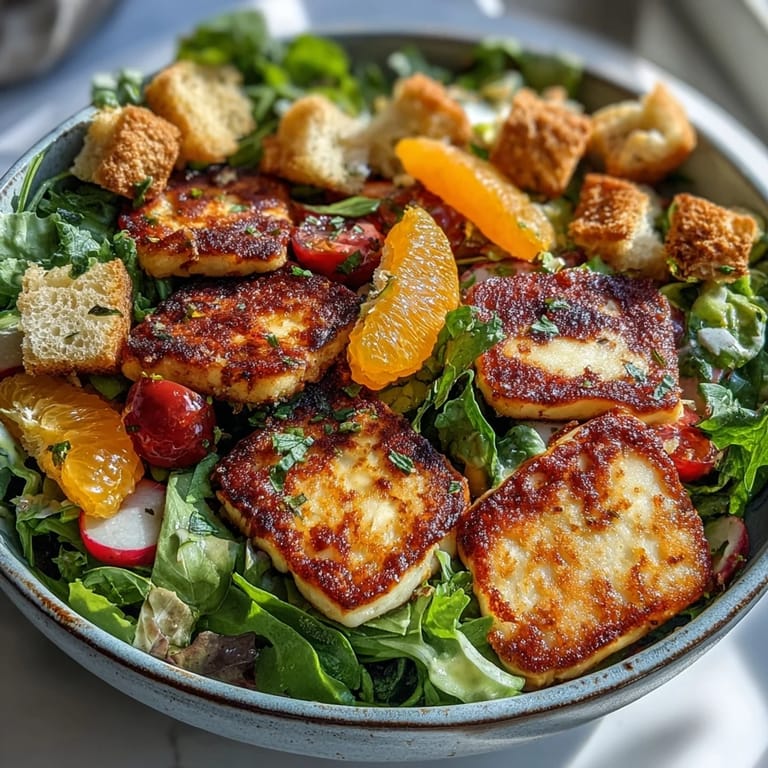
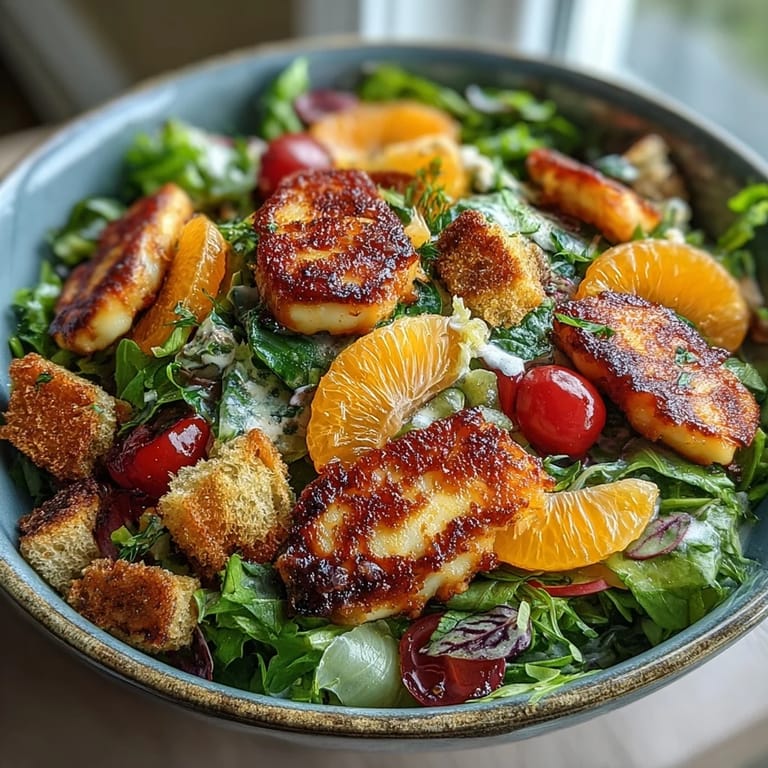
 There's something about the sizzle of halloumi hitting a hot pan that makes you feel like you've cracked some culinary secret, even if you're just standing there with a spatula. I discovered this salad during a late summer afternoon when my fridge held the most random collection of ingredients—some blood oranges I'd impulse-bought, a block of halloumi, and crusty sourdough going slightly stale. What emerged was this gorgeous, unexpected thing: warm salty cheese against bright citrus, crispy bread, and a dressing that tasted like the Mediterranean had decided to settle on my plate.
I made this for my sister one evening when she was going through a phase of claiming nothing tasted good anymore. She took one bite, paused mid-chew, and just went quiet—the kind of quiet that means something clicked. The warm cheese, the cold crunch of radish, that unexpected pomegranate molasses hit—it all came together in a way that made her forget she'd been cynical about food for weeks.
Ingredients
- Halloumi cheese, sliced into 1 cm thick pieces: This is non-negotiable at roughly 200 g—halloumi's high melting point means it holds its shape when fried, creating that glorious contrast between warm and soft inside, crispy exterior.
- Blood oranges, peeled and segmented: Two of them, if they're medium-sized; the deep red-purple color is pure visual joy, and the flavor is more complex than regular oranges, with subtle berry notes underneath.
- Mixed salad greens (romaine, arugula, parsley, mint): Aim for about 150 g of a blend that includes fresh herbs—parsley and mint make this salad taste intentional rather than generic.
- Cucumber, diced: One small one keeps things light; larger cucumbers get watery, and you want clean crunch.
- Cherry tomatoes, halved: Eight of them provides sweetness and acidity that balances the richness of the cheese.
- Red onion, thinly sliced: Just half a small one—raw onion can be sharp, but thinly sliced it adds color and a gentle bite without overpowering.
- Radishes, thinly sliced: Two radishes add peppery crunch that nobody expects but everyone appreciates once they taste it.
- Sourdough bread, cut into cubes: Two thick slices, cut into roughly 1 cm pieces; the tang of sourdough complements the citrus beautifully.
- Olive oil for croutons: Two tablespoons, plus a pinch of sea salt; toasting brings out the bread's natural flavor.
- Extra virgin olive oil: Three tablespoons for the dressing—this is where quality matters because it's not cooked, just tasted.
- Fresh lemon juice: One and a half tablespoons; fresh is essential, not bottled.
- Pomegranate molasses: One tablespoon of this dark, tangy concentrate adds depth that regular vinegar can't quite replicate.
- Sumac: One teaspoon of this crimson spice is the secret ingredient that makes people ask what you used—it's lemony without being acidic, almost floral.
- Ground black pepper and sea salt: A quarter teaspoon each for the dressing, tasted at the end to adjust.
Tired of Takeout? 🥡
Get 10 meals you can make faster than delivery arrives. Seriously.
One email. No spam. Unsubscribe anytime.
Instructions
- Toast the croutons while you prep everything else:
- Preheat your oven to 200°C and toss those sourdough cubes with olive oil and a good pinch of sea salt—you want them to smell toasty and golden after 8 to 10 minutes on a baking tray, then let them cool so they stay crispy.
- Fry the halloumi until it's golden on both sides:
- Heat a non-stick skillet over medium heat and work in batches if needed so the cheese isn't crowded—it should sizzle immediately and turn golden after 2 to 3 minutes per side, then rest briefly on a paper towel to drain any excess oil.
- Assemble your greens and fresh vegetables in a large bowl:
- Combine the salad greens, diced cucumber, halved cherry tomatoes, sliced red onion, sliced radishes, and blood orange segments—this is where you taste for balance and adjust if needed.
- Whisk together the dressing until it's emulsified:
- In a small bowl, combine the extra virgin olive oil, lemon juice, pomegranate molasses, sumac, black pepper, and sea salt—whisk until it looks slightly thickened and the sumac is evenly distributed, which takes about 30 seconds.
- Bring it all together at the last possible moment:
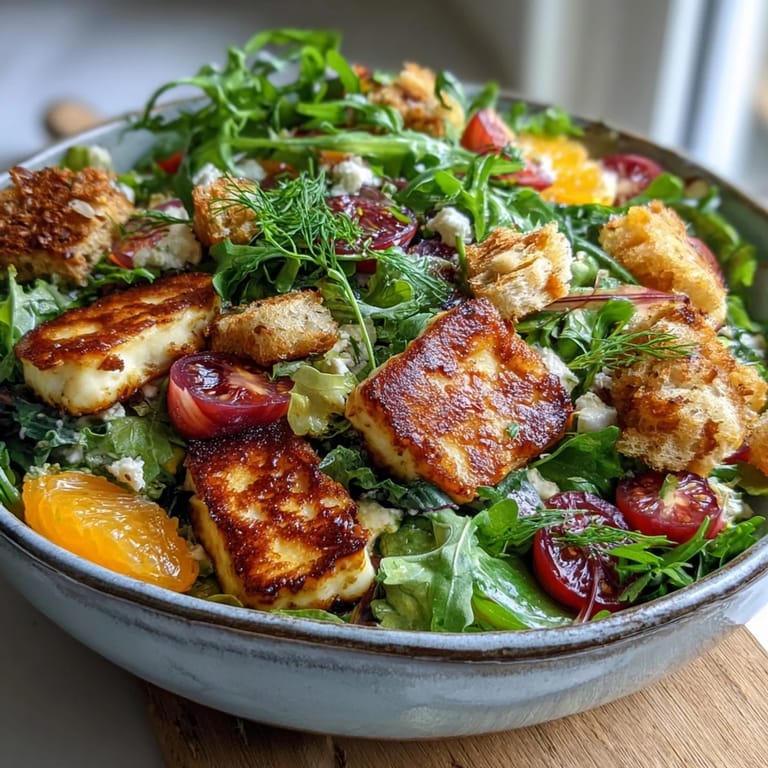
- Add the warm fried halloumi and toasted croutons to your salad bowl, drizzle with dressing, and toss gently so the cheese and croutons don't break apart—the warmth of the cheese will slightly wilt the greens in the best way.
- Serve immediately while the halloumi is still warm:
- This is not a salad that waits well; the croutons soften and the cheese cools, which changes the whole experience.
 Pin It
 I served this at a small dinner party once, and someone asked for the recipe before even finishing their plate. That doesn't happen often, and it reminded me that sometimes the simplest combinations—good cheese, bright fruit, the right spice—create something that feels generous and warm without trying too hard.
Why This Salad Works
The genius of fattoush is that it plays temperature and texture against each other: warm against cold, soft against crunchy, rich against fresh. Halloumi is particularly special because it's one of the few cheeses that actually benefits from being fried—it gets this creamy, almost melting interior while the surface develops a satisfying crust. Blood oranges add sophistication that regular citrus can't quite touch, and sumac ties everything together with its subtle lemony, almost floral quality that makes people lean back and wonder what they're tasting.
Making It Your Own
This salad is forgiving in the best way. If you can't find blood oranges, regular oranges or even pink grapefruit work beautifully; if you don't have pomegranate molasses on hand, a mix of balsamic and lemon juice gets you most of the way there. Some people add toasted pistachios or walnuts for extra crunch and earthiness, which I've never regretted—pomegranate seeds scattered on top add tartness and visual drama if you want to lean into the jewel-toned aesthetic.
Timing and Serving
The beauty of this salad is that you can prep absolutely everything ahead except the halloumi frying. Chop your vegetables, make your dressing, toast your croutons, and keep them in a covered container—then when it's time to eat, you're just five minutes away from a composed, elegant plate. It serves four as a standalone salad or six as a side to grilled fish or chicken, and it pairs effortlessly with a crisp white wine like Sauvignon Blanc that echoes the citrus notes.
- Keep the dressing separate until the very last moment so the greens stay crisp and the croutons don't soften prematurely.
- If you're cooking for people with allergies, check your halloumi and sourdough labels carefully—both commonly contain milk and gluten respectively.
- Taste the dressing before you commit it to the salad; citrus and vinegars vary, so you might need slightly more or less of either depending on what you're using.
 Pin It
 This salad has become my answer to the question of what to cook when I want something that tastes special but doesn't require an hours-long project in the kitchen. It's the kind of meal that makes you feel like you're sitting somewhere warm and bright, even if it's actually raining outside.
Recipe FAQs
- → Can I prepare this salad ahead of time?
Prepare all vegetables and dressing up to 4 hours ahead. Store separately in the refrigerator. Fry halloumi and make croutons just before serving to maintain optimal texture and warmth.
- → What can I substitute for halloumi?
Paneer, firm feta, or grilled chicken breast work well as alternatives. For a vegan option, try fried firm tofu or tempeh marinated in olive oil and lemon juice.
- → How do I cut blood oranges for salad?
Peel the orange completely, then carefully slice between each membrane to release individual segments. This method, called supreming, removes all bitter white pith for cleaner presentation.
- → Can I use regular oranges instead of blood oranges?
Absolutely. Navel oranges, cara cara oranges, or even pink grapefruit provide similar sweetness and acidity. Blood oranges add beautiful color, but the flavor profile works with any citrus variety.
- → What's the best way to store leftovers?
Store salad components separately in airtight containers. The dressed salad is best enjoyed immediately as croutons will soften. Reheat halloumi in a dry pan to restore crispness before assembling leftovers.
- → Can I make this gluten-free?
Replace sourdough croutons with gluten-free bread cubes or omit entirely. Add extra vegetables like bell peppers or roasted chickpeas for additional texture and substance.