 Pin It
 One afternoon, I was scrolling through my phone while my sister complained about wanting dessert that wouldn't derail her gym routine, and I realized I'd been making cheesecake all wrong for years. The cottage cheese sitting in my fridge sparked something—why not swap out the heavy cream cheese and see what happens? The result was so creamy and surprisingly decadent that she asked for the recipe before even finishing her slice. That's when I knew I'd stumbled onto something worth perfecting.
I made this for a dinner party where one guest casually mentioned being on a macro-counting phase, and watching her face light up when she realized she could have seconds without the usual dessert math was pure joy. Her skepticism about cottage cheese in a cheesecake turned into genuine surprise—she texted me the next day saying it was the first dessert that didn't leave her feeling bloated. Small moments like that remind me why I love cooking for people.
Ingredients
- Graham cracker crumbs: The foundation that holds everything together, and I've learned that a slightly darker, thinner crust works better here than the thick, buttery kind because it won't compete with the creamy filling.
- Coconut oil or melted butter: Either works beautifully, though coconut oil gives a slightly lighter feel if that matters to you.
- Unsweetened cocoa powder: Use the good stuff—this is where half your chocolate flavor comes from, so don't reach for the sweetened variety.
- Maple syrup: Brings a gentle sweetness to the crust that balances the cocoa without making it cloying.
- Low-fat cottage cheese: The star ingredient that keeps this lighter than traditional cheesecake while delivering that creamy richness you're after.
- Plain Greek yogurt: Adds tang and structure, and honestly, it's what keeps the texture from becoming grainy no matter how long you chill it.
- Large eggs: The binder that helps everything set properly without relying on extra cream cheese.
- Granulated sugar or sweetener: Adjust to your taste preference, though I find granulated sugar gives the smoothest texture.
- Unsweetened cocoa powder: The chocolate backbone of the filling, layered with the melted chocolate chips for depth.
- Vanilla extract: A small but essential detail that lifts all the chocolate notes without announcing itself.
- Cornstarch: This tiny amount prevents cracks and keeps the center from becoming too dense.
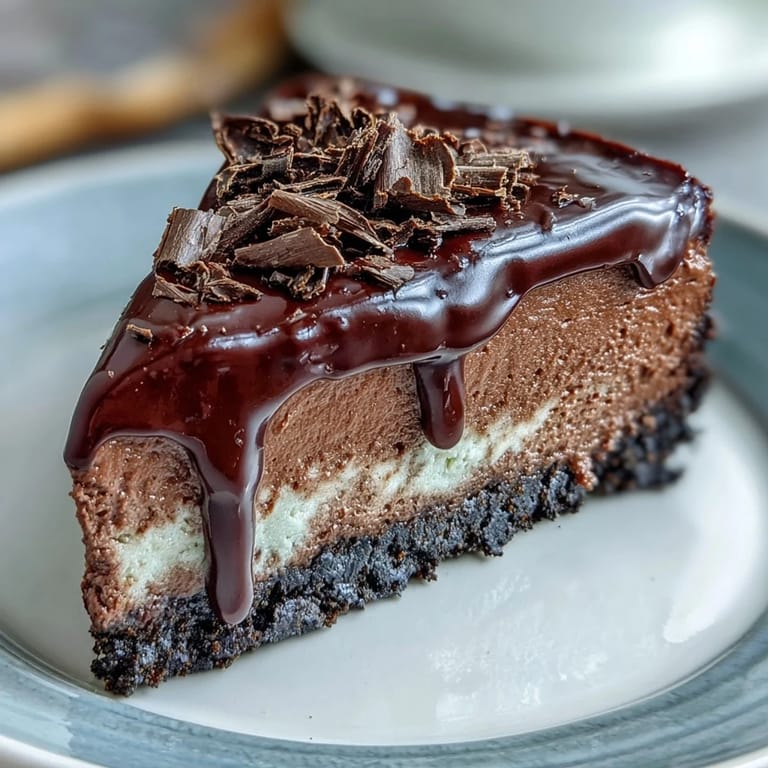
- Dark chocolate chips, melted and cooled: The finishing touch that makes people say wow instead of just nodding politely.
- Greek yogurt topping: Optional, but if you use it, it cuts through the richness in a way that makes you want another bite.
- Dark chocolate shavings: For garnish that actually tastes good, not just looks pretty.
Tired of Takeout? 🥡
Get 10 meals you can make faster than delivery arrives. Seriously.
One email. No spam. Unsubscribe anytime.
Instructions
- Set the stage:
- Preheat your oven to 170°C (340°F) and line a 20 cm springform pan with parchment paper on the bottom—this prevents any sticky situations when you're trying to unmold later. Trust me, future you will appreciate this small gesture.
- Build the crust:
- Mix your graham cracker crumbs with cocoa powder, melted coconut oil, and maple syrup until it resembles wet sand, then press it firmly into the pan bottom and bake for 8 minutes until it smells toasty. Let it cool while you work on the filling, which only takes a few minutes.
- Blend the filling:
- This is the crucial step—run your cottage cheese through a food processor or blender for 1 to 2 minutes until it's completely smooth with no grainy texture whatsoever, then add the Greek yogurt, eggs, sugar, cocoa powder, vanilla, cornstarch, and melted chocolate and blend until silky and uniform. The longer you blend, the lighter and airier the final cheesecake becomes.
- Pour and smooth:
- Pour the chocolate filling over your cooled crust and use a rubber spatula to smooth the top into an even layer. Take a breath—you're almost there.
- Bake low and slow:
- Bake for 35 to 40 minutes until the center is just set but still slightly wobbly when you gently shake the pan—this wobbly center is your signal that it's done, not under baked. Turn off the oven, crack the door open about 2 inches, and let the cheesecake cool inside for a full hour to prevent cracks from thermal shock.
- Chill and set:
- Remove from the oven and refrigerate for at least 3 hours, though overnight is ideal if you have the patience. This resting period is when the flavors settle and the texture becomes perfectly creamy instead of too soft.
- Serve with style:
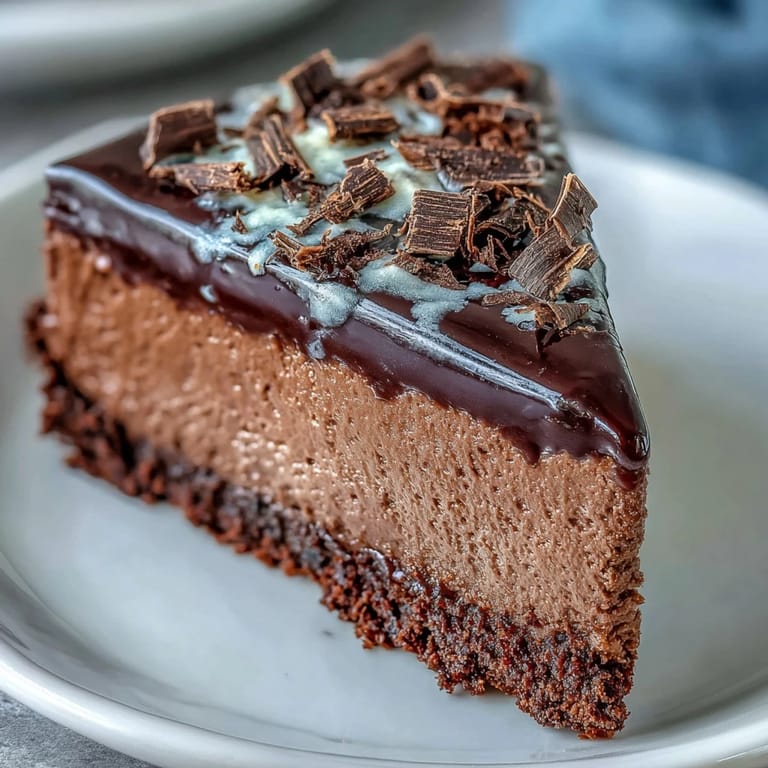
- Before serving, spread a thin layer of Greek yogurt on top if you like, then shower it with dark chocolate shavings. A small drizzle of honey wouldn't hurt either.
 Pin It
 There was a Tuesday morning when I found myself reheating a leftover slice with my coffee, and it suddenly hit me that this cheesecake had become something I actually wanted to eat again, not something I felt obligated to finish. That's when desserts stop being about indulgence and start being about joy.
The Cottage Cheese Secret
I used to think cottage cheese had no place in anything fancy, but the moment I committed to blending it properly, I realized it's one of those humble ingredients that quietly transforms what's possible in your kitchen. It's high in protein, surprisingly neutral in flavor once blended, and creates a texture that's lighter than traditional cheesecake without sacrificing any of the richness you're craving. The Greek yogurt works alongside it to prevent that grainy texture that plagued my first attempts, and together they create something that feels both indulgent and honest about what you're actually eating.
Baking Temperature and Timing Matter
The lower temperature of 170°C might seem unusual compared to traditional cheesecake recipes, but it's intentional—it gives the filling time to cook gently and evenly without the edges puffing up or cracking before the center sets. That gentle bake, combined with the slow cooling in the turned-off oven, is what separates a silky cheesecake from one that's dense or cracked. I learned this the hard way by rushing the process once, and the difference is so noticeable that I'll never skip those steps again.
Customization and Storage Tips
This recipe is forgiving enough to adapt to what you have on hand, whether that's a swap from maple syrup to honey or agave, or using gluten-free graham crackers if you need to. Fresh berries scattered on top or served alongside cut through the richness beautifully, and honestly, a simple drizzle of berry coulis would elevate this from weeknight dessert to something you'd serve at a dinner party. Keep your cheesecake refrigerated in an airtight container for up to 4 days, and it actually tastes better on day two when all the flavors have melded together.
- Make this dessert a day or two ahead so the flavors deepen and the texture becomes even creamier.
- If you want to freeze it, wrap individual slices tightly and they'll keep for up to a month, though let them thaw in the fridge for a few hours before serving.
- A tiny pinch of espresso powder mixed into the filling deepens the chocolate flavor without making it taste like coffee.
 Pin It
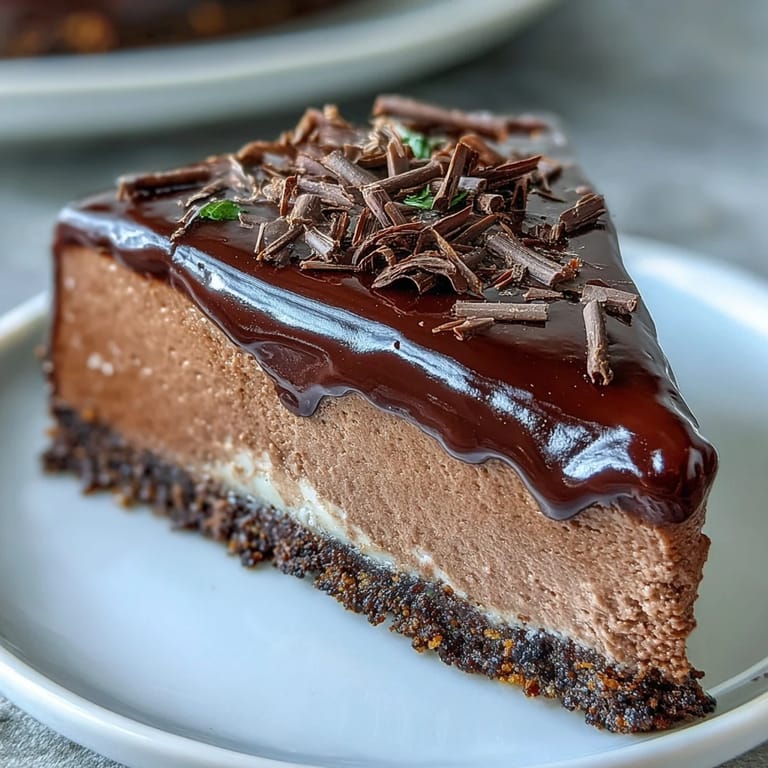
 This cheesecake has quietly become the dessert I reach for when I want something that feels special without the usual aftermath of guilt or heaviness. It's proof that you don't need traditional ingredients to create something genuinely worth savoring.
Recipe FAQs
- → Can I taste the cottage cheese?
When blended until completely smooth, cottage cheese becomes indistinguishable in flavor and texture. It simply creates a creamy, protein-rich base that tastes like traditional cheesecake filling.
- → How long does this need to chill?
For the best texture, chill for at least 3 hours or overnight. The filling needs time to fully set and develop that creamy, firm consistency cheesecake is known for.
- → Can I make this gluten-free?
Absolutely. Simply use gluten-free graham crackers or almond flour for the crust. Everything else in this dessert is naturally gluten-free.
- → Why cool the cheesecake in the oven?
Gradual cooling prevents cracks from forming. By cracking the oven door and letting it cool slowly, the filling settles gently without sudden temperature changes that cause cracking.
- → Can I use a different sweetener?
Yes. Maple syrup, honey, coconut sugar, or your preferred granulated sweetener all work well. Adjust to taste depending on your desired sweetness level.
- → How should I store leftovers?
Keep refrigerated in an airtight container for up to 5 days. The texture actually improves after a day or two as flavors meld together.