 Pin It
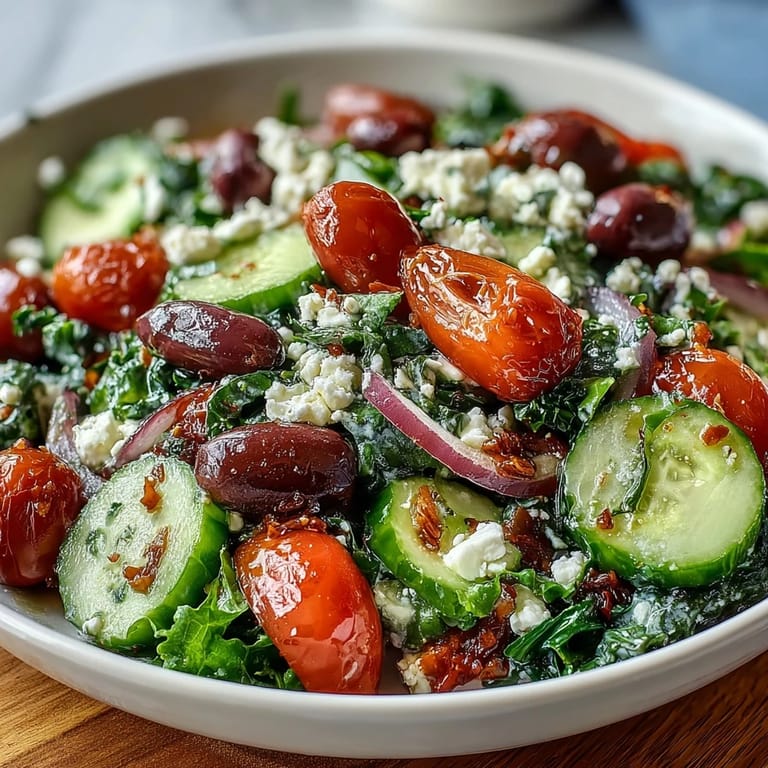
 There's something about a Mediterranean salad that stops you mid-afternoon—the kind of bowl that tastes like someone just whispered a secret about what real food should be. I discovered this particular combination on a sweltering July day when my refrigerator felt like my only friend, and I had nothing but scattered vegetables, a block of feta, and pure desperation. What emerged was so bright and alive that I've made it at least weekly since, each time finding some small reason it feels different than the last.
I served this to my neighbor last summer when she stopped by unannounced, and she sat on my porch and ate two huge bowls while we talked about absolutely nothing important. Halfway through, she looked up and asked if I'd made it myself, which felt like the highest compliment—as if something this good couldn't possibly come from my kitchen. That moment taught me that the simplest meals are sometimes the ones people remember most.
Ingredients
- Spring mix (5 cups): Use whatever tender greens you find—baby spinach, arugula, butterhead lettuce all work beautifully, and the mix prevents any single flavor from taking over.
- Cherry tomatoes (1 cup, halved): Halving them releases just enough juice to mingle with the dressing, and they stay intact enough to feel substantial.
- Cucumber (1 cup, sliced): The cooling crunch matters more than the exact thickness, though I prefer thin coins that bend slightly under your fork.
- Kalamata olives (1/2 cup, pitted and halved): These briny little gems carry the entire Mediterranean story, so don't skip them or swap for the bland green ones.
- Red onion (1/4 cup, thinly sliced): The sharpness cuts through the richness and adds a gentle bite that keeps your palate awake.
- Feta cheese (3.5 oz, crumbled): Creamy, tangy, and salty all at once—it's the ingredient that transforms salad into something worth sitting down for.
- Extra-virgin olive oil (1/4 cup): This is not the time to economize; good oil makes the dressing taste like it came from somewhere specific and warm.
- Red wine vinegar (2 tbsp): The acidity balances everything and prevents the salad from feeling heavy, even though feta could easily tip it that way.
- Dried oregano (1 tsp): A pinch of dried oregano carries memory—it whispers of sun-baked hillsides without ever leaving your kitchen.
- Garlic clove (1, minced): Don't let it sit minced too long before mixing into the dressing, or it grows sharp and aggressive instead of gently present.
- Dijon mustard (1/2 tsp): This tiny amount acts as an emulsifier, holding the oil and vinegar together in a way plain water never could.
- Salt and black pepper (1/4 tsp each): Taste as you go because feta brings its own saltiness, and you might need less than you expect.
Tired of Takeout? 🥡
Get 10 meals you can make faster than delivery arrives. Seriously.
One email. No spam. Unsubscribe anytime.
Instructions
- Gather and prep your vegetables:
- Slice everything while you have momentum—the tomatoes halved, cucumber into thin coins, red onion into paper-thin ribbons. There's something meditative about the rhythm of knife work that prepares you for eating slowly.
- Build the salad foundation:
- Toss the spring mix, tomatoes, cucumber, olives, and red onion in your largest bowl, using your hands to cradle everything gently so nothing bruises. The pre-mixing lets the vegetables mingle and get to know each other before the dressing arrives.
- Whisk the dressing to life:
- In a small jar or bowl, combine olive oil, vinegar, oregano, minced garlic, Dijon mustard, salt, and pepper, then whisk hard until the mixture becomes pale and slightly thickened. This emulsification is where the magic lives—the oil and vinegar stop fighting and become something unified and glossy.
- Dress and serve immediately:
- Drizzle the dressing over the salad just before eating and toss with the gentleness of someone handling something precious. Scatter the crumbled feta over the top and eat right away while the greens are still cold and the dressing still clings.
 Pin It
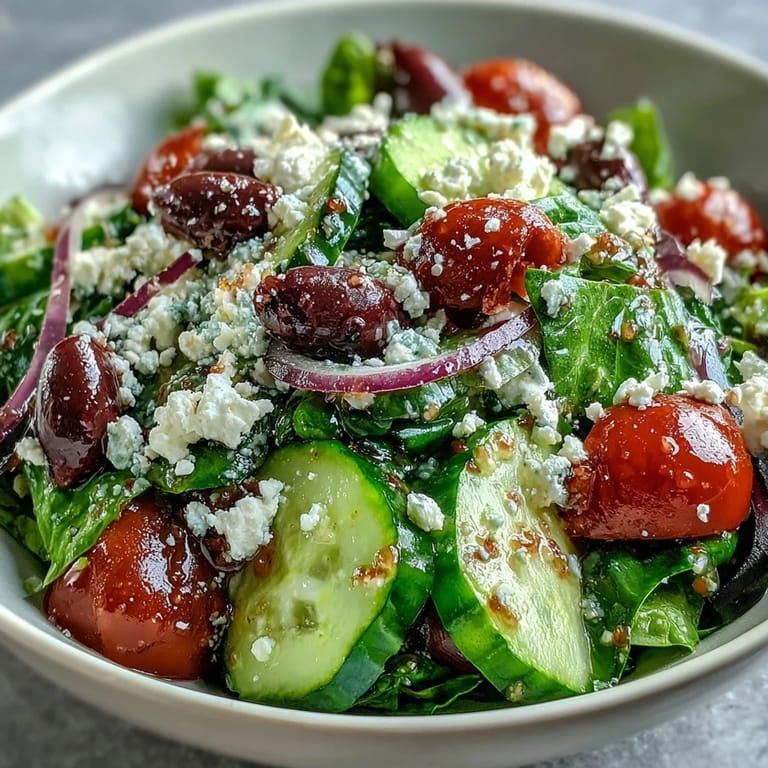
 My daughter once asked why I made salad so often, and I realized I couldn't fully explain—it's partly discipline, partly love, and partly the fact that some meals taste like taking care of yourself. This bowl became our ritual on busy weeknights, a way to eat vegetables that didn't feel like punishment.
The Dressing That Changes Everything
I spent years making Greek dressing with only oil and vinegar, wondering why mine never tasted as balanced as restaurant versions. The moment I added that tiny amount of Dijon mustard, everything shifted—the acid and oil stopped playing tug-of-war and started dancing together. Now I make extra dressing to keep in a jar, drizzling it over leftovers the next day or using it on grilled vegetables, and it lasts longer than you'd expect because the mustard acts as a preservative.
Building Layers of Flavor Without Complexity
Mediterranean food doesn't need twenty ingredients to feel complete—it needs the right ones in the right proportion. I've learned that this particular combination works because each element brings something irreplaceable: the olives bring brine, the feta brings richness, the tomatoes bring sweetness, and the vinegar brings everything into focus. When one ingredient is missing, you notice immediately, which tells you something true about balance.
Making It Your Own
This salad is forgiving enough to welcome additions without losing its soul. I've added grilled chicken on nights when I needed protein, scattered toasted pine nuts when I wanted crunch, and once even tossed in some chickpeas when I wanted the meal to sit heavier. The formula stays constant, but you're free to move around inside it.
- For extra substance, add grilled chicken, white beans, or crumbled feta that's been sitting at room temperature for a creamier texture.
- Toasted pine nuts or sunflower seeds add crunch without overwhelming the delicate balance of fresh vegetables and tangy cheese.
- Warm pita bread or crusty sourdough beside the bowl makes this feel less like a side and more like a complete meal worth celebrating.
 Pin It
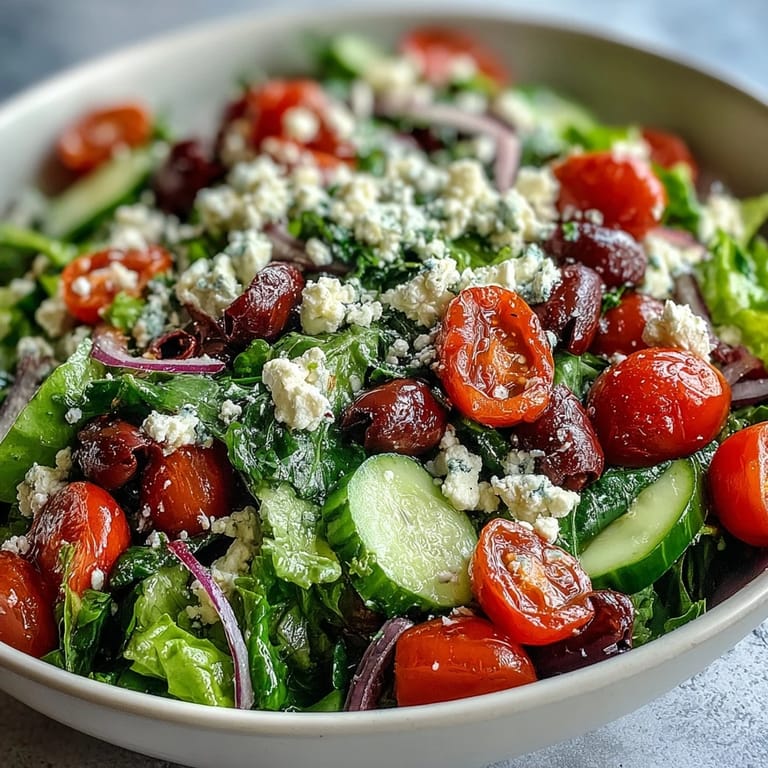
 This salad reminds me that sometimes the most satisfying meals are the ones that don't require heat or complexity—just intention and good ingredients treated with respect. Make it when you want to feel cared for by your own hands.
Recipe FAQs
- → Can I make this salad ahead of time?
Yes, prepare the vegetables and dressing separately up to 24 hours in advance. Store the chopped vegetables in airtight containers and keep the dressing in a jar. Combine and toss just before serving to maintain crispness.
- → What can I substitute for feta cheese?
Try goat cheese for a similar tangy creaminess, or use vegan feta for dairy-free needs. Grilled halloumi works beautifully too, adding warm, salty goodness to the bowl.
- → How long does the Greek dressing keep?
The homemade Greek dressing stays fresh in the refrigerator for up to one week when stored in a sealed jar. Give it a good shake or whisk before using, as ingredients may separate slightly.
- → Can I add protein to make it a complete meal?
Absolutely. Grilled chicken breast, pan-seared shrimp, or chickpeas transform this into a satisfying main course. Even simple additions like hard-boiled eggs or quinoa work wonderfully.
- → What other vegetables work well in this bowl?
Bell peppers, radishes, avocado, or roasted eggplant make excellent additions. Fresh herbs like parsley, mint, or basil enhance the Mediterranean flavors. Grilled zucchini pairs beautifully too.