 Pin It
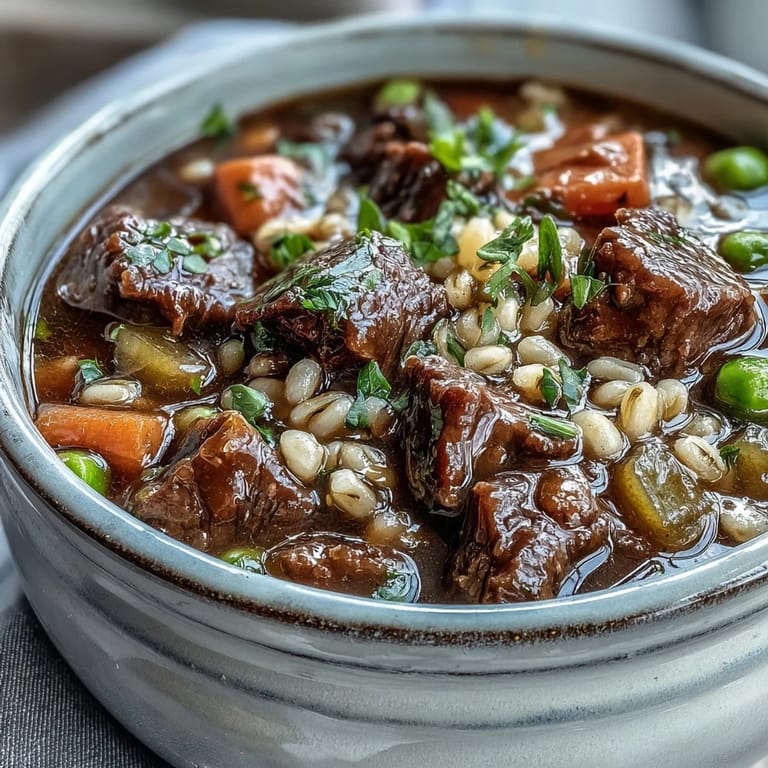
 My neighbor appeared at my door one October evening with an armful of mushrooms from her farmer's market haul, insisting I needed to use them in something warm. That night, I threw together this beef and barley soup almost by accident, layering flavors as I went, and somehow it became the thing I make whenever the first real chill hits the air. It's the kind of soup that fills your kitchen with such an honest, savory smell that people start appearing in your doorway asking what you're cooking.
I made this for my dad after his surgery, bringing it in a container to the hospital with strict instructions on how to reheat it. He told me later it was the first meal that actually felt like home, not just something consumed. That's when I realized this soup isn't just nourishing—it's genuinely healing in a way that goes beyond nutrition.
Ingredients
- Beef stew meat, 1 lb cubed: Buy pieces roughly the same size so they cook evenly; smaller cubes will shred into the broth, larger ones stay distinct.
- Pearl barley, 3/4 cup rinsed: Rinsing removes the starch coating, preventing the soup from becoming gluey—this step genuinely matters.
- Carrots, 2 medium diced: Cut them on the larger side so they hold their shape and provide little pockets of sweetness.
- Celery stalks, 2 diced: This is your flavor foundation; don't skip it even if you're not typically a celery person.
- Onion, 1 large chopped: Yellow onions break down and almost disappear, creating a subtle sweetness throughout.
- Garlic, 2 cloves minced: Add it after the vegetables soften or it'll burn and turn bitter—timing here is everything.
- Potatoes, 1 cup diced: Waxy potatoes hold their shape better than russets, which can get mealy.
- Mushrooms, 1 cup sliced: These add an earthy depth that makes the broth taste like it's been cooking for days.
- Frozen peas, 1 cup: Add them near the end so they stay bright and don't lose their individual texture.
- Diced tomatoes, 1 can optional: They add brightness and cut through the richness if your broth feels too heavy.
- Beef broth, 8 cups: Use good quality broth; it becomes the backbone of everything else, so don't settle for weak stuff.
- Bay leaves, 2: Remove them before serving or someone will bite into one—ask me how I know.
- Dried thyme and parsley, 1 tsp each: These dry herbs bloom as the soup simmers, releasing their best flavors.
- Olive oil, 2 tbsp: Enough to coat the pan without making it greasy; this is where browning the beef happens.
- Salt and pepper: Taste as you go; the broth already has salt, so you're building layers, not starting from scratch.
Tired of Takeout? 🥡
Get 10 meals you can make faster than delivery arrives. Seriously.
One email. No spam. Unsubscribe anytime.
Instructions
- Brown the beef first:
- Get your oil shimmering hot, then add beef in a single layer—you'll hear it sizzle immediately. Don't move it around; let each side develop a golden crust for about 5 minutes total, then set it aside.
- Build your flavor base:
- Toss in the onions, carrots, celery, and mushrooms to that same pot; the browned bits stuck to the bottom will flavor everything. Cook until the vegetables soften and the mushrooms release their moisture, about 5 minutes.
- Bloom the garlic:
- Add minced garlic and stir constantly for just 1 minute—you want it fragrant, not burnt and bitter.
- Bring everything together:
- Return the beef to the pot, add potatoes, barley, tomatoes if you're using them, then pour in your broth. Toss in the bay leaves, thyme, and parsley, stirring to combine everything evenly.
- Let it simmer low and slow:
- Bring to a boil first, then drop the heat to low, cover it, and forget about it for an hour. Stir occasionally so nothing sticks to the bottom, but mostly just let the heat work its magic.
- Finish with the peas:
- After an hour, taste the broth—it should taste rich and meaty. Add your peas, season generously with salt and pepper, and let it cook uncovered for another 20 to 30 minutes until the barley is tender and the beef pulls apart easily.
- Serve and enjoy:
- Fish out those bay leaves, ladle into deep bowls, and serve while it's still steaming.
 Pin It
 There was a Saturday in late November when three friends showed up unexpectedly, and I had this soup simmering quietly on the stove. We ended up sitting around my kitchen table for hours, the kind of gathering that happens without planning, and this soup became the reason they stayed. Food like this has this quiet magic—it makes people want to linger.
The Barley Matters
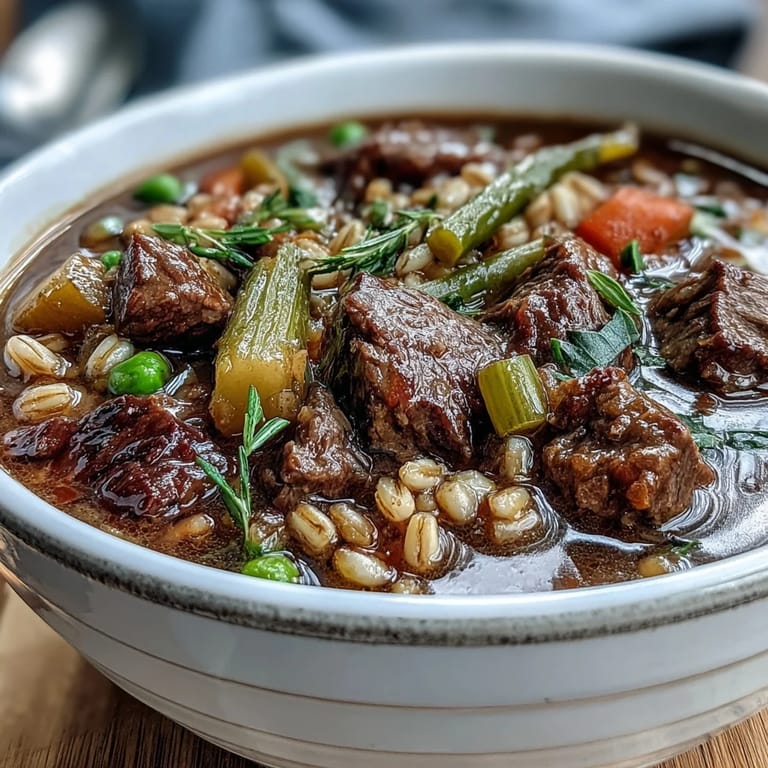
Most people think barley is just filler, but it's actually the soul of this soup. As it cooks, it releases a subtle starch that makes the broth slightly thicker and creamier without needing cream or flour. The grains also absorb the beef flavor, so by the end you're getting these little pockets of pure umami with every spoonful. I learned early on that undercooked barley is chewy and unpleasant, but overcooked barley turns to mush—you want it tender but still holding its shape, which usually happens right around the 1 hour 20 minute mark.
Temperature and Timing
The long simmer at low heat is what transforms tough beef into something that falls apart on your tongue. Boiling it hard would make it seize up and stay tough, so resist the urge to rush it with high heat. The vegetables also need time to break down and marry with the broth, creating layers of flavor rather than separate ingredients just sitting in liquid. If you're in a real hurry, you can cook it on medium heat instead of low, but add 15 to 20 minutes to the total time and stir more frequently so nothing scorches on the bottom.
Storage and Variations
This soup keeps beautifully in the refrigerator for 4 days and freezes for up to 3 months, making it perfect for batch cooking or having on hand for emergencies. When you reheat it, the flavors actually intensify, so don't be surprised if day-three tastes even better than day-one. You can easily swap vegetables based on what you have—parsnips, turnips, or even green beans work wonderfully—and the soup adapts without complaint.
- Store in airtight containers and cool completely before refrigerating to avoid condensation and food safety issues.
- Freeze in individual portions so you can reheat exactly what you need without thawing the whole batch.
- Add fresh herbs like parsley or dill right before serving to brighten the flavors if the soup tastes heavy.
 Pin It
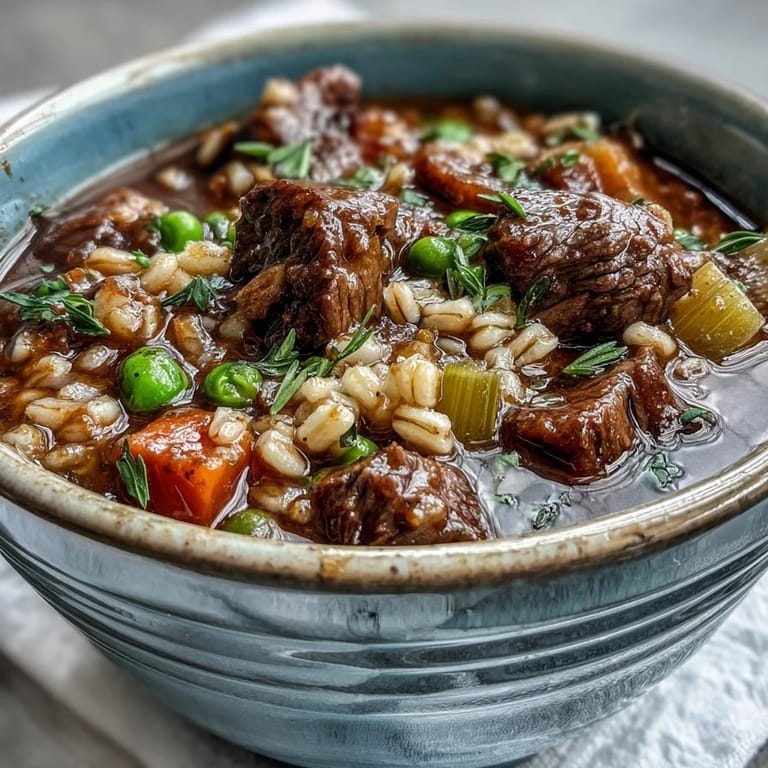
 This soup has a way of making ordinary moments feel intentional and warm. Once you make it, you'll find yourself reaching for it whenever you need comfort or have people to feed.
Recipe FAQs
- → Can I use quick-cooking barley instead of pearl barley?
Yes, but reduce the cooking time to about 30-40 minutes total. Quick-cooking barley breaks down faster and may become mushy if simmered for the full time.
- → What cut of beef works best for this soup?
Chuck roast or stew meat are ideal choices. These tougher cuts become tender during the long simmering process and add rich flavor to the broth.
- → Can I make this in a slow cooker?
Absolutely. Brown the beef first, then transfer everything to a slow cooker and cook on low for 6-8 hours or high for 3-4 hours. Add peas in the last 30 minutes.
- → How do I prevent the barley from absorbing all the broth?
Rinse the barley before adding it, and add extra broth if needed during cooking. The barley will absorb about 3 times its volume in liquid as it cooks.
- → Can I freeze this soup with the barley already cooked?
Yes, though the barley may soften further when reheated. For best texture, slightly undercook the barley if you plan to freeze portions.
- → What vegetables can I substitute or add?
Parsnips, turnips, green beans, or corn all work wonderfully. Just match cooking times—add harder vegetables with the barley, tender ones near the end.