 Pin It
 The aroma of toasted roux stopped me in my tracks the first time I walked past a corner kitchen in the French Quarter. It smelled like butter, patience, and something almost burned but not quite. I tracked down the source and watched a cook stir a pot without breaking rhythm, her wooden spoon scraping the bottom in slow circles. She called it étouffée, and when she let me taste it over rice, I understood why people talk about food like it has a soul.
I made this for a dinner party once and nearly abandoned the roux halfway through when my arm got tired from stirring. My friend took over for five minutes while I caught my breath, and we joked that étouffée is a team sport. When we finally sat down to eat, everyone went quiet for the first few bites. One person looked up and said it tasted like New Orleans, even though we were a thousand miles away.
Ingredients
- Vegetable oil: Neutral oil handles high heat without smoking, which matters when you are nursing a roux for twenty minutes.
- All-purpose flour: This thickens the sauce and combines with oil to form the roux, the backbone of the entire dish.
- Onion, green bell pepper, celery: The holy trinity of Cajun cooking, providing a sweet and savory base that feels like home.
- Garlic: Added near the end so it perfumes the pot without turning bitter or sharp.
- Shrimp: Tender and sweet, they soak up the sauce and cook quickly, though crawfish works just as well if you can find it.
- Seafood stock: Builds depth and ties everything together, though chicken stock works in a pinch.
- Worcestershire sauce: A few dashes add umami and a whisper of tang that balances the richness.
- Cajun seasoning: Brings warmth and complexity without making you reach for a glass of water.
- Cayenne pepper: Use it to control the heat, a little goes a long way.
- Bay leaf: Infuses the sauce with a subtle herbal note that disappears if you forget it but shines when you remember.
- White rice: The fluffy, neutral canvas that lets the étouffée be the star.
- Green onions and parsley: Fresh, bright, and they wake up every spoonful right before serving.
Tired of Takeout? 🥡
Get 10 meals you can make faster than delivery arrives. Seriously.
One email. No spam. Unsubscribe anytime.
Instructions
- Start the roux:
- Heat the oil in a heavy pot over medium heat, then whisk in the flour until smooth. Stir constantly with a wooden spoon, scraping the bottom to prevent scorching.
- Cook the roux:
- Keep stirring without stopping until the mixture turns the color of dark chocolate, about 15 to 20 minutes. The smell will shift from raw flour to nutty and toasted.
- Add the vegetables:
- Toss in the onion, bell pepper, and celery, stirring them into the roux. Let them soften for 5 to 7 minutes, their moisture will cool the roux slightly.
- Stir in the garlic:
- Add the minced garlic and stir for about a minute until the kitchen smells like heaven. Do not let it brown.
- Pour in the stock:
- Gradually add the seafood stock, whisking to blend it with the roux and vegetables. The mixture will thicken as it heats.
- Season and simmer:
- Stir in the shrimp, Worcestershire sauce, Cajun seasoning, cayenne, bay leaf, salt, and pepper. Bring it to a simmer, then lower the heat and cook uncovered for 20 to 30 minutes, stirring now and then.
- Finish and serve:
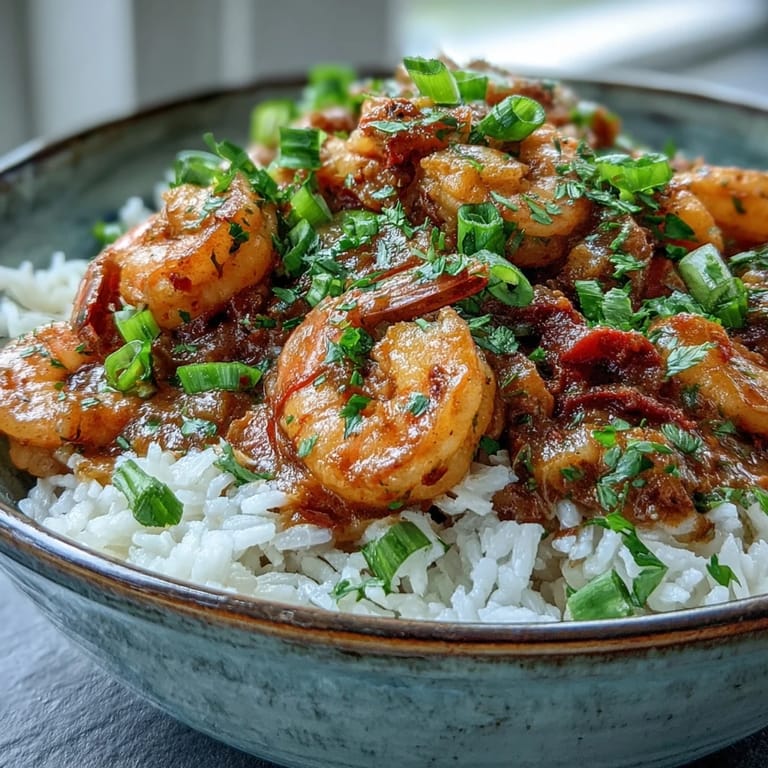
- Taste and adjust the seasoning, then fish out the bay leaf. Spoon the étouffée over hot rice and scatter green onions and parsley on top.
 Pin It
 One Sunday I reheated a bowl of leftover étouffée and sat on the porch with it while the sun came up. The flavors had deepened overnight, the spice mellowed, and the shrimp tasted like they had been swimming in that sauce forever. I realized then that some recipes are better when you give them time, just like the people who taught them to you.
How to Know Your Roux Is Ready
The roux should smell toasted and nutty, not raw or burned. It will darken gradually from blonde to peanut butter to milk chocolate to dark chocolate. If you see black specks or smell anything acrid, start over because burned roux tastes bitter and ruins the whole pot. Trust your nose and keep the heat steady.
Swapping the Protein
Chicken thighs or andouille sausage make this heartier and just as satisfying if shellfish is not your thing. I have also used mushrooms for a vegetarian version, though you lose some of the briny sweetness. Whatever you choose, add it at the same stage as the shrimp and adjust the cooking time so everything finishes tender.
Storing and Reheating
Étouffée keeps in the fridge for up to three days and freezes well for a month if you leave out the rice. Reheat it gently on the stove with a splash of stock to loosen the sauce. The flavors deepen as it sits, so day two often tastes better than day one.
- Store rice separately so it does not get mushy.
- Reheat on low heat, stirring often to prevent sticking.
- Taste and add a pinch of Cajun seasoning if the flavor dulls after freezing.
 Pin It
 This dish taught me that good food does not have to be complicated, it just has to be made with attention. Stir the pot, trust the process, and your kitchen will smell like New Orleans.
Recipe FAQs
- → What makes a dark roux different from a light roux?
A dark roux is cooked longer until it reaches a rich chocolate color, taking about 15-20 minutes of constant stirring. This develops a deeper, more complex nutty flavor that's essential for authentic étouffée, whereas light roux is pale and milder, better for sauces like gravy.
- → Can I make this étouffée with chicken instead of shrimp?
Absolutely. Diced chicken breast or thighs work beautifully in this dish. Add the chicken when you would normally add the shrimp, but cook it slightly longer since chicken needs more time to cook through than shrimp. The sauce and flavors remain equally delicious.
- → What is the holy Trinity in Cajun cooking?
The holy Trinity refers to the three foundational vegetables in Cajun and Creole cuisine: onion, green bell pepper, and celery. This aromatic base provides the flavor foundation for many Louisiana dishes, including gumbo, jambalaya, and étouffée.
- → How spicy is this étouffée?
The heat level is moderate and adjustable. One teaspoon of Cajun seasoning plus ¼ teaspoon of cayenne provides a gentle warmth. For more spice, increase the cayenne. For a milder version, reduce or omit the cayenne entirely—the dish remains flavorful without excessive heat.
- → Can I freeze leftover étouffée?
Yes, étouffée freezes well for up to 3 months. Cool completely before transferring to an airtight container. Thaw overnight in the refrigerator and reheat gently on the stove, adding a splash of stock if the sauce has thickened too much. The flavors often develop even more after freezing.
- → What's the difference between étouffée and gumbo?
While both feature a dark roux and the holy Trinity vegetables, étouffée has a thicker, richer sauce that coats the main ingredient, whereas gumbo is more soup-like with additional ingredients like okra or filé powder. Étouffée typically focuses on one protein like shrimp or crawfish.