 Pin It
 There's something almost meditative about standing over a pot of onions for nearly an hour, watching them transform from sharp and pungent to sweet and golden. I learned to make French onion soup not from a cookbook but from a chilly October afternoon in a cramped Paris kitchen, where a friend's grandmother showed me that patience and low heat were more important than any fancy technique. The soup that emerged that day was nothing like the canned versions I'd eaten before—it was complex, deeply savory, with layers of flavor built entirely from humble ingredients and time. Now whenever I make it, I'm transported back to that kitchen, to the sound of a wooden spoon scraping the bottom of the pot, and to the moment when everything clicked into place.
My partner once said this soup reminded them of a hug from someone who actually listens—warm, comforting, and exactly what you needed without asking. I remember ladling it into bowls on a night when everything felt overwhelming, and watching the cheese melt and bubble under the broiler somehow made the world feel smaller and more manageable. That's when I realized this wasn't just a recipe; it was a small act of kindness you could serve to yourself or someone else.
Ingredients
- Yellow onions, 3 large, thinly sliced: Use yellow onions rather than white or red—they caramelize faster and develop a deeper, more complex sweetness that's essential to this soup.
- Unsalted butter, 1 tablespoon: Butter brings a richness that olive oil alone can't achieve; the combination of butter and oil prevents the butter from browning too quickly.
- Olive oil, 1 tablespoon (plus 1 tablespoon for bread): A good quality olive oil adds its own subtle flavor and helps regulate the heat so nothing burns.
- Garlic, 2 cloves, minced: Add this only after the onions are golden to prevent it from becoming bitter during the long cooking process.
- Sugar, 1 teaspoon: This small amount accelerates caramelization and deepens the onions' natural sweetness without making the soup taste sweet.
- Salt, 1/2 teaspoon (plus more for seasoning): Salt draws out the onions' moisture, which is crucial for proper caramelization, so don't skip adding it halfway through cooking.
- Freshly ground black pepper, 1/4 teaspoon: Always grind your own pepper just before using—pre-ground loses its sharpness and bite.
- All-purpose flour, 2 tablespoons: This creates a light roux that helps the broth become silky and helps it cling to the onions.
- Dry white wine, 1/2 cup: The wine adds acidity and complexity; don't use anything you wouldn't drink, as cheap wine will make the soup taste thin.
- Beef or vegetable stock, 1.2 liters (5 cups): Use homemade stock if possible, as it creates a richer finish than store-bought, though good quality store-bought works fine too.
- Fresh thyme, 2 sprigs: Fresh herbs matter here—dried thyme becomes dusty and flavorless during long cooking.
- Bay leaf, 1: This adds an herbal undercurrent that prevents the soup from tasting too heavy or one-dimensional.
- French baguette, 4 slices (about 1 inch thick): Day-old bread toasts better than fresh; it becomes crisp rather than chewy underneath the cheese.
- Gruyère cheese, 120 g (about 1 cup), grated: Gruyère melts smoothly and develops a nutty, complex flavor when broiled; don't use pre-shredded cheese, which contains anti-caking agents that prevent smooth melting.
Tired of Takeout? 🥡
Get 10 meals you can make faster than delivery arrives. Seriously.
One email. No spam. Unsubscribe anytime.
Instructions
- Melt and coat:
- Heat the butter and olive oil together in your pot over medium heat until the butter foams and smells nutty. Add all the sliced onions at once and give them a good stir so each slice gets coated in the fat—this is when the real work begins, but trust that you're setting up for something special.
- Caramelize slowly and patiently:
- Stir the onions every few minutes for the first 20 minutes, then less frequently as they start to stick slightly and brown on the bottom. When about halfway through (after 17–20 minutes), sprinkle in the sugar and salt, which will make the onions release more liquid and caramelize faster—listen for the sizzle when you add these.
- Deepen the color and flavor:
- Keep cooking until the onions are a deep amber brown and smell sweet and caramelized, about 35–40 minutes total. The bottom of the pot will develop a brown crust—this is flavor, not burning, so don't worry.
- Build the aromatics:
- Add the minced garlic and cook, stirring constantly, for just 1 minute until fragrant. Any longer and it will brown and taste bitter, losing its contribution to the soup.
- Add flour and create body:
- Sprinkle the flour over the onions and stir for about 2 minutes, coating every piece. You'll feel the mixture become slightly thicker and paste-like, which is exactly what you want.
- Deglaze with wine:
- Pour in the white wine and scrape the bottom of the pot with a wooden spoon, releasing all those browned, caramelized bits—this is liquid gold in terms of flavor. The wine will sizzle and steam; let it reduce for a minute or two so the raw alcohol smell disappears.
- Build the broth:
- Pour in your stock, add the thyme sprigs and bay leaf, and bring everything to a simmer. The soup should bubble gently at the edges, not boil vigorously, so adjust your heat accordingly.
- Simmer and refine:
- Let the soup cook uncovered for 20–25 minutes, which allows some liquid to evaporate and flavors to concentrate and marry together. Before serving, fish out the thyme sprigs and bay leaf, then taste and adjust salt and pepper—this is your final chance to balance the flavors.
- Toast the bread:
- While the soup simmers, preheat your broiler and arrange baguette slices on a baking sheet. Brush both sides lightly with olive oil and broil for about 1 minute per side until golden and crisp, watching carefully so they don't burn.
- Assemble and finish:
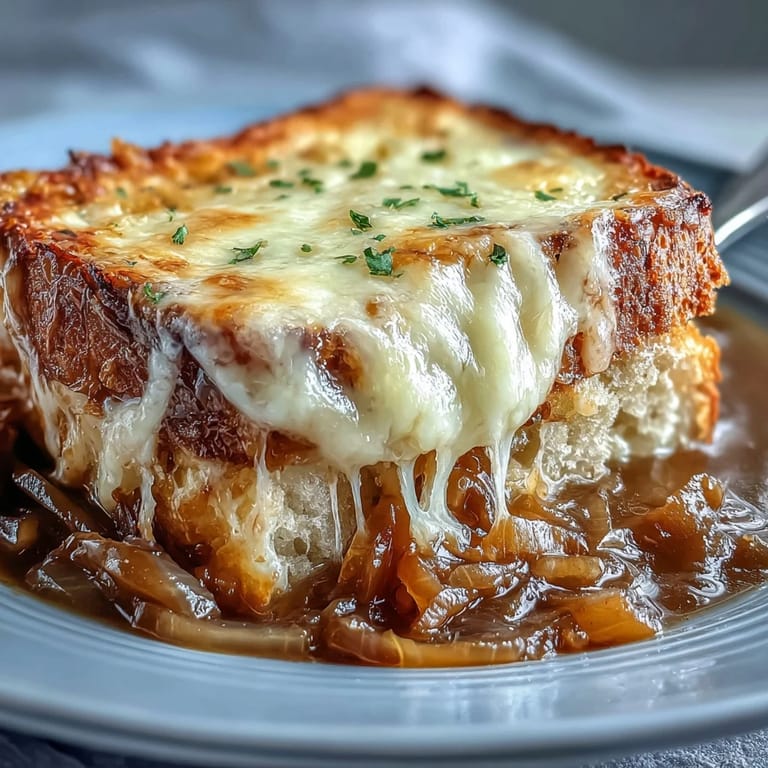
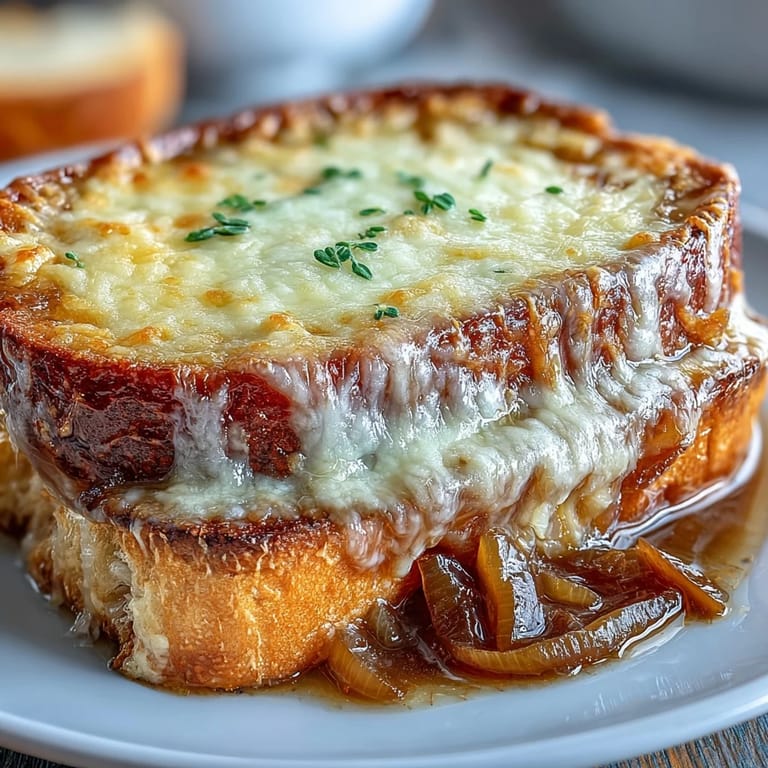
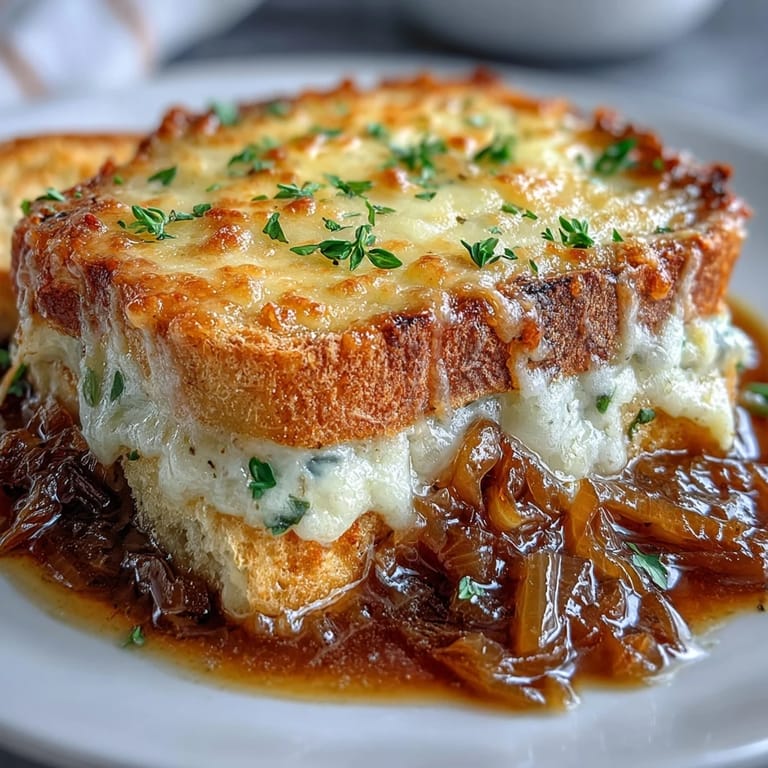
- Ladle your hot soup into oven-safe bowls (regular bowls will crack under the broiler), top each with a toasted baguette slice, then pile grated Gruyère generously on top. Place the bowls on a baking sheet and broil for 2–3 minutes until the cheese melts, bubbles, and turns golden brown—the moment it's done, pull it out and serve immediately while everything is still hot and dramatic.
 Pin It
 A friend who'd been having a rough week came over unexpectedly, and I had most of these ingredients in my kitchen, so I started chopping onions without telling them what I was making. By the time the soup was finished, something had shifted—they were smiling, talking about their day differently, and we ate in comfortable silence for a while. It struck me that food doesn't just nourish the body; sometimes it creates the space for people to feel held and understood.
The Magic of Caramelization
Caramelization is what separates this soup from every mediocre version you've ever tried, and it's not complicated—it's just time and attention. The onions' natural sugars brown slowly over medium heat, developing hundreds of new flavor compounds that taste sweet, savory, and almost nutty all at once. If you rush it with high heat, you'll burn the onions and create a bitter, charred mess; if you turn up the heat partway through because you're impatient, you're sabotaging yourself. The best part? You can't really mess it up if you keep the heat moderate and stir occasionally, so trust the process.
Wine, Deglazing, and Depth
The moment you pour white wine into that pot of caramelized onions and scrape the bottom, you're performing real kitchen chemistry. All those browned, crusty bits—called fond—are concentrated flavor that would be wasted if you didn't deglaze, so you're essentially converting them into something delicious that dissolves into your broth. The wine itself adds acidity that balances the sweetness of the onions and prevents the soup from tasting flat or one-dimensional. Don't skip this step or substitute with water; the wine genuinely matters.
Cheese, Broiling, and the Final Moment
The cheese topping is where this soup becomes more than just comfort food—it's where it becomes theater. Gruyère isn't just any cheese; it has a complex, slightly nutty flavor that gets deeper and more interesting as it melts and browns under the broiler, rather than becoming one-dimensional like milder cheeses. The moment you pull those bowls out of the broiler, the cheese should be bubbling aggressively at the edges and golden on top, which means you've created an insulating layer that keeps the soup hot while adding textural contrast. Serve immediately, and maybe warn whoever's eating that the bowls are incredibly hot—that's part of the experience.
- If your broiler runs hot, start checking at 2 minutes to prevent the cheese from burning.
- Grate your own Gruyère the day of cooking for the smoothest, most luxurious melt.
- The toasted baguette becomes part of the soup as it sits, soaking up broth and creating something between soup and bread—this is intentional and delicious.
 Pin It
 This soup teaches you something important about cooking: that the simplest ingredients, treated with respect and time, can create something extraordinary. Every time you make it, you're honoring a tradition while also creating your own moment in the kitchen, and that matters.
Recipe FAQs
- → How long does it take to properly caramelize the onions?
Properly caramelizing the onions takes about 35-40 minutes over medium heat with frequent stirring. The sugar and salt added halfway through help enhance the caramelization process and deepen the flavor.
- → Can I use a different type of cheese instead of Gruyère?
Yes, you can substitute Gruyère with Emmental or Comté cheese, which have similar melting properties and nutty flavors that complement the caramelized onions beautifully.
- → What type of stock works best for this soup?
Beef stock provides the traditional rich flavor, but vegetable stock works wonderfully for a vegetarian version. For deeper complexity, try combining beef and chicken stock.
- → Do I need special bowls to make this dish?
Yes, you'll need oven-safe soup bowls that can withstand the high heat of the broiler. Traditional French onion soup crocks work perfectly, but any heat-resistant ceramic or stoneware bowls will do.
- → How can I add more depth to the flavor?
For a heartier, more complex flavor, add a splash of brandy or sherry along with the white wine when deglazing the pot. This adds an extra layer of richness to the broth.
- → Can this soup be made ahead of time?
Yes, the soup base can be prepared up to 3 days in advance and refrigerated. When ready to serve, reheat the soup, then add the bread and cheese topping before broiling.