 Pin It
 My first real encounter with French onion soup wasn't in a bistro—it was in my neighbor's kitchen on a cold October evening when she was teaching me that patience with onions changes everything. She stood at the stove for nearly forty minutes, stirring occasionally, letting the heat coax out something magical from what started as plain yellow bulbs. The kitchen filled with a smell so rich and deep it felt like stepping into a different world entirely. That night, I learned that some dishes aren't about rushing; they're about letting time do the work while you pay attention.
I made this soup for my sister during her first winter in the city, when she was feeling homesick and overwhelmed. Watching her face when that first spoonful hit—the warmth, the umami, the way the cheese stuck to the bread—something shifted. She asked for the recipe before she'd even finished the bowl, and I realized this wasn't just food; it was comfort translated into a language everyone understands.
Ingredients
- Yellow onions (4 large ones, thinly sliced): These are your foundation; yellow onions caramelize into pure sweetness over low heat, which is why they're non-negotiable here.
- Leeks (2 large, white and light green parts, cleaned and sliced): They add a subtle sweetness and body that regular onions can't provide on their own—think of them as the supporting actor that makes everything better.
- Shallots (3, thinly sliced): These bring a delicate complexity and refined flavor that elevates the soup from good to memorable.
- Garlic cloves (3, minced): Add garlic at the very end of caramelizing—if it hits the hot pan too early, it burns and turns bitter.
- Unsalted butter and olive oil (3 tablespoons butter, 2 tablespoons oil): The combination prevents the butter from burning while adding the richness that makes this soup sing.
- High-quality beef broth (8 cups): This is where you don't skimp; good broth means the entire soup tastes better—use homemade or the best store-bought you can find.
- Worcestershire sauce and soy sauce (1 tablespoon and 2 teaspoons): These aren't about making it taste fishy or salty; they're umami boosters that deepen the savory character.
- Dry white wine (1/2 cup): The acidity cuts through richness and adds brightness; avoid anything you wouldn't drink.
- Fresh thyme and bay leaf: Fresh thyme is worth seeking out because the flavor is cleaner and more fragrant than dried, though dried works in a pinch.
- Baguette (sliced into 1/2-inch rounds): A good baguette makes the difference—you want something crusty that toasts well, not soft sandwich bread.
- Gruyère cheese (2 cups, grated): Gruyère has a lower melting point than many cheeses and creates that perfect creamy layer; it's worth the hunt.
- Parmesan cheese (1/2 cup, optional): Adds a sharper, saltier edge that some people adore; it's optional but recommended.
- Salt and black pepper: Taste as you go because the broth and added sauces already contain salt.
Tired of Takeout? 🥡
Get 10 meals you can make faster than delivery arrives. Seriously.
One email. No spam. Unsubscribe anytime.
Instructions
- Prep your alliums with purpose:
- Slice the onions, leeks, and shallots into thin, even pieces—this matters because uniform slices cook at the same rate. Clean the leeks thoroughly by slicing them lengthwise and rinsing between the layers where dirt hides.
- Start the caramelization:
- Heat butter and olive oil in a large heavy-bottomed pot over medium heat until the mixture shimmers. Add all the sliced onions, leeks, and shallots at once, stirring well to coat everything in fat.
- Tend the slow magic:
- This is the hardest part: stir frequently (every 3–5 minutes) and let the heat stay at medium. You're looking for deep golden-brown color, not burnt edges—expect 35–40 minutes of stirring and waiting, which feels longer than it is.
- Add garlic at the right moment:
- When the onions are deep golden and very soft, add the minced garlic and cook for exactly 2 minutes, stirring constantly. Any longer and it burns; any shorter and you miss that gentle toasted flavor.
- Deglaze with wine:
- Pour in the white wine and scrape the bottom of the pot with a wooden spoon, loosening all those caramelized brown bits—that's where flavor lives. Let it bubble for a minute or two.
- Build the broth base:
- Add the beef broth, Worcestershire sauce, soy sauce, fresh thyme, and bay leaf. Give it a good stir and bring the whole pot to a simmer over medium heat.
- Simmer and develop:
- Reduce heat to medium-low and let it simmer uncovered for 30 minutes, stirring occasionally. The soup will continue to deepen and meld, becoming more complex with each minute.
- Taste and season:
- Remove the bay leaf and taste carefully for salt and pepper. Remember that the broiler step concentrates flavors, so go slightly under on seasoning now.
- Toast the bread:
- While the soup finishes, arrange baguette slices on a baking sheet and turn on your broiler. Toast for about 1 minute per side until golden and crispy—watch them because broilers are unpredictable.
- Assemble and finish:
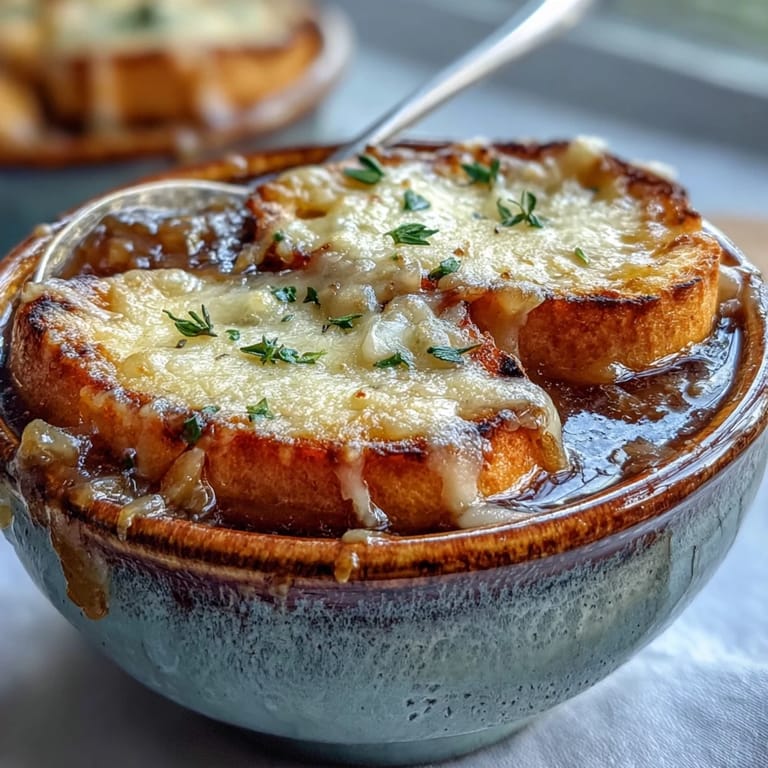
- Ladle hot soup into oven-safe bowls, top each with a couple of toasted baguette slices, then pile on a generous handful of grated Gruyère and a sprinkle of Parmesan if using. Place bowls under the hot broiler for 3–5 minutes until the cheese is melted, bubbly, and starting to brown slightly.
- Serve with care:
- The bowls will be extremely hot—warn people before they pick them up. A tiny pinch of fresh thyme on top is the final touch that says you cared.
 Pin It
 Years later, I realized this soup taught me something I use in other cooking: that the most luxurious results often come from the simplest ingredients treated with respect and time. There's no fancy technique hiding here, just onions, heat, and attention—which somehow feels like the most sophisticated thing of all.
The Science of Caramelization
Caramelization isn't browning; it's a chemical transformation where the natural sugars in onions break down and recombine into hundreds of new flavor compounds. This happens around 330°F, which is why medium heat matters—high heat burns before the magic can happen. The longer you stir and wait, the more of these compounds develop, creating layers of flavor that taste almost savory despite being entirely natural sweetness.
Why Quality Broth Makes or Breaks It
This soup is essentially caramelized onions swimming in broth, which means the broth is your foundation. A thin, salty store-bought broth will taste thin and salty; a rich, well-made broth (homemade is ideal, but the best boxed versions work) will taste like you spent hours on it. If you have access to homemade beef stock, this is the dish to use it in—it's where that investment pays off immediately.
Cheese and Bread: The Finishing Touch That Matters
The toasted bread and melted cheese aren't just toppings; they're textural contrast and richness that completes the dish. Gruyère is your best choice because it has a lower melting point and creates a smooth, creamy layer—cheddar gets oily, Swiss stays stringy, and American cheese is never the answer. The bread needs to be toasted until crispy so it stays firm enough to support the cheese without turning into mush.
- If your bowls aren't oven-safe, transfer the soup to oven-safe vessels before adding the cheese and broiling.
- You can prep toasted bread ahead and add it just before serving, or assemble everything and broil right before bringing it to the table.
- The soup reheats beautifully; just add fresh toasted bread and cheese when serving leftovers.
 Pin It
 This soup has become one of those dishes I make when I want to show someone I care, or when the weather turns cold and the world needs something warm and honest. It's simple, it's satisfying, and somehow it always feels like a small celebration.
Recipe FAQs
- → How long does it take to properly caramelize the onions?
Plan for 35-40 minutes of slow cooking over medium heat, stirring frequently. The onions should become very soft and deep golden brown. Rushing this step will result in less complex flavor, so patience is essential for authentic French onion soup.
- → Can I make this soup vegetarian?
Yes, substitute high-quality vegetable broth for beef broth and use a vegetarian Worcestershire sauce alternative. The caramelized onions, leeks, and shallots still provide deep, complex flavor even without meat-based broth.
- → What cheese can I use instead of Gruyère?
Swiss cheese or Emmental are excellent substitutes with similar melting properties and nutty flavor. You can also use a combination of mozzarella for meltability and Parmesan for flavor depth.
- → Do I need oven-safe bowls for this soup?
Yes, oven-safe ceramic or stoneware bowls are necessary since the filled bowls go under the broiler to melt and bubble the cheese topping. Standard bowls may crack or break under high heat.
- → Can I prepare this soup in advance?
The soup base can be made up to 3 days ahead and refrigerated. When ready to serve, reheat the soup, ladle into bowls, add the toasted bread and cheese, then broil just before serving for the best texture.
- → Why add soy sauce to French onion soup?
Soy sauce adds extra umami depth and richness to the broth without being detectable as a distinct flavor. This technique enhances the savory complexity of the soup alongside the Worcestershire sauce.