 Pin It
 There's something almost meditative about watching butternut squash transform in the oven—the way the edges caramelize to a deep amber while the kitchen fills with this nutty, almost sweet aroma that makes everyone pause and ask what you're cooking. I discovered this soup on a gray November afternoon when I had a squash sitting on my counter and no real plan, just a vague memory of how good roasted vegetables taste. The result was so silky and comforting that it became the thing I make when I want to turn an ordinary weeknight into something that feels intentional.
I made this for my neighbor one October when she mentioned offhandedly that she was tired of eating the same sad desk lunches. She came over skeptical—butternut squash soup sounded fine but not exciting—and then took a spoonful and just went quiet for a moment. That quiet told me everything, and now she texts me every fall asking if I'm making it again. Food doesn't always need to be complicated to matter.
Ingredients
- 1 large butternut squash (about 2 lbs), peeled, seeded, and cubed: This is where your soup gets its backbone—a good squash should feel heavy for its size and have a deep tan color, not pale or soft spots.
- 1 medium yellow onion, chopped: Onions add subtle depth and sweetness as they roast; don't skip this even if you think you don't like onions in soup.
- 2 garlic cloves, peeled: Whole cloves roast into something almost sweet and mellow, not sharp like raw garlic.
- 1 medium carrot, peeled and chopped: A natural sweetener and thickening agent that rounds out the flavor.
- 4 cups vegetable broth: Use good broth here—it matters because there's nothing else to hide behind once everything blends together.
- 2 tbsp olive oil: This helps everything caramelize in the oven and carries flavor beautifully.
- 1 tsp salt, 1/2 tsp black pepper, 1/2 tsp ground nutmeg: Nutmeg is the secret—just a whisper of it makes people wonder what they're tasting but can't quite name.
- 1/4 tsp cayenne pepper (optional): A tiny pinch adds complexity without heat; it's there to enhance, not announce itself.
- Heavy cream or coconut cream for garnish: A swirl of richness on top, but the soup is genuinely good without it if you're keeping things light.
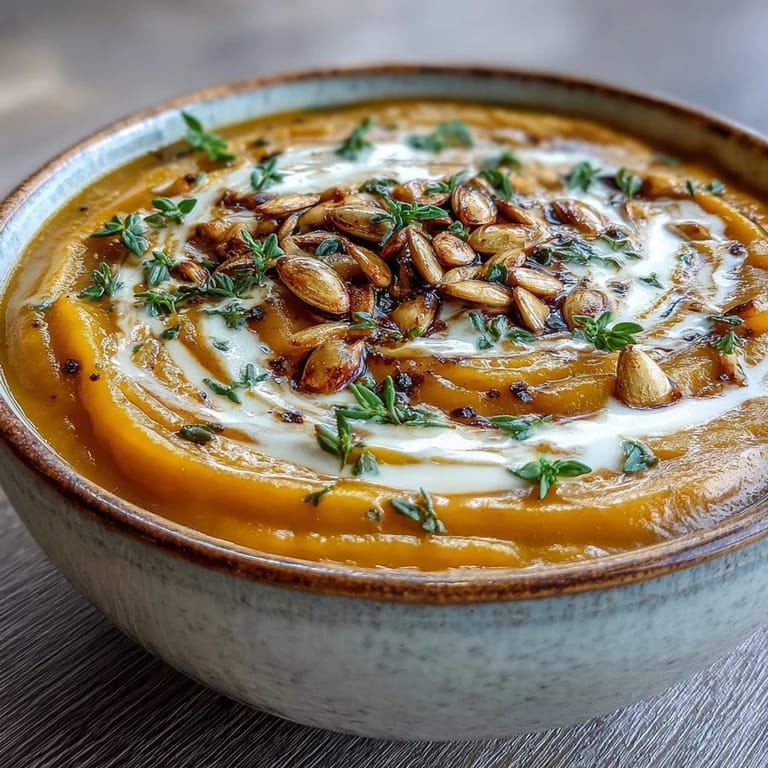
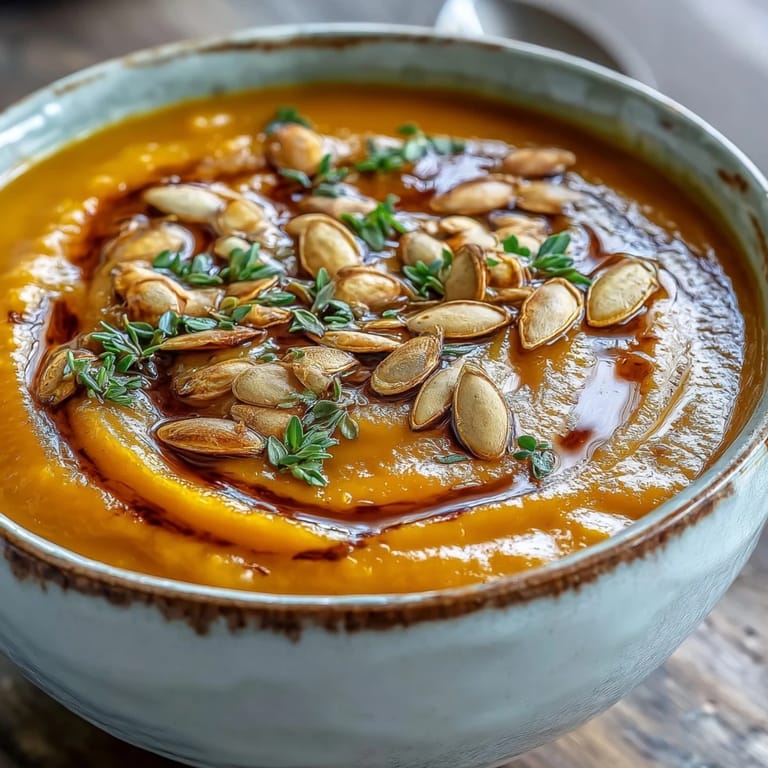
- Toasted pumpkin seeds and fresh thyme for garnish: These turn a simple bowl into something you want to photograph—they add texture and a little something-special feeling.
Tired of Takeout? 🥡
Get 10 meals you can make faster than delivery arrives. Seriously.
One email. No spam. Unsubscribe anytime.
Instructions
- Get your oven ready:
- Preheat to 400°F and give it a few minutes to fully heat—this matters more than you'd think for getting that caramelization started.
- Prepare and toss:
- Put all your chopped squash, onion, garlic, and carrot on a baking sheet, drizzle generously with olive oil, and toss everything with your hands until it's evenly coated. This step feels simple but it's crucial—uneven oiling means uneven browning.
- Roast until golden:
- Slide the sheet into the oven for 30 to 35 minutes, stirring halfway through so the edges get their time in the hot spots. You're looking for tender flesh and caramelized edges with a little bit of char—that's where the flavor lives.
- Move to the pot:
- Scrape everything from the baking sheet into a large pot, making sure you get those little browned bits stuck to the pan. Add your vegetable broth, salt, pepper, nutmeg, and cayenne if you're using it.
- Simmer gently:
- Bring everything to a simmer over medium heat and let it bubble quietly for about ten minutes—this resting time lets the flavors meld and get to know each other.
- Blend until smooth:
- If you have an immersion blender, stick it right into the pot and blend until the soup is completely smooth and silky. If you're using a countertop blender, work in batches and be careful with the heat—you want creamy soup, not a burn on your hand.
- Taste and adjust:
- This is your moment to add a pinch more salt or nutmeg if it needs it—every palate is different, and this soup forgives gentle tweaks.
- Make it richer (if you want):
- Stir in a splash of heavy cream or coconut cream if you're feeling indulgent, then ladle into bowls and top with pumpkin seeds, a drizzle of cream, and a tiny sprig of thyme.
 Pin It
 I'll never forget my daughter asking for seconds of this soup and then saying, "This doesn't taste like healthy food," which I took as the highest compliment. It proved to me that nourishing food and delicious food don't have to live in separate worlds.
The Magic of Roasting
Roasting vegetables does something chemistry-wise that boiling simply cannot—the heat caramelizes natural sugars, creates complex flavors, and deepens everything. I learned this the hard way after making a pale, sad boiled squash soup that tasted like disappointment, then pivoting to this roasted version and never looking back. The difference is genuinely night and day, and it's not just my opinion—everyone who tries this recognizes it as something special.
Texture Matters
A silky, velvety soup feels luxurious on your tongue and makes you eat slower, more deliberately, which somehow makes the experience feel more satisfying. I once served this to someone who was expecting chunky vegetable soup and watching their expression shift when they discovered it was smooth as silk was its own reward. The immersion blender is your friend here—it gives you complete control over texture.
Variations and Serving Ideas
This soup is a canvas, and once you've made it the basic way, you can start playing with additions and accompaniments that make it feel fresh each time. I've made it with a grated apple stirred into the roasting tray for subtle sweetness, with crispy sage instead of thyme, with a dollop of harissa for heat, and every version has been worth making. Here are some ways to make it feel different:
- Add a small apple to the roasting tray for understated sweetness that makes people wonder what they're tasting.
- Swirl in a bit of tahini or miso paste to make the soup feel richer and more complex without being heavy.
- Serve alongside crusty bread or a grilled cheese sandwich for comfort that feels intentional and complete.
 Pin It
 This soup has become the thing I make when I want to feel like I'm taking care of myself or someone I love, which turns out to be the most important quality a recipe can have. Make it, share it, and watch how something this simple becomes a moment worth remembering.
Recipe FAQs
- → Can I make this soup ahead of time?
Yes, this soup stores beautifully in the refrigerator for up to 5 days. Reheat gently on the stovetop and adjust seasoning as needed. It also freezes well for up to 3 months.
- → How do I make this soup vegan?
Simply substitute coconut cream for heavy cream, or omit the cream entirely. Ensure your vegetable broth is labeled vegan, as some brands contain animal products.
- → What can I serve with butternut squash soup?
This soup pairs wonderfully with crusty bread, grilled cheese sandwiches, or a fresh green salad. For a heartier meal, serve alongside roasted vegetables or a grain bowl.
- → Can I roast the squash in advance?
Absolutely. Roast the vegetables up to 2 days ahead and store them in the refrigerator. When ready to serve, simply add them to the pot with broth and seasonings, then blend.
- → What if I don't have an immersion blender?
A countertop blender works perfectly. Allow the soup to cool slightly, then blend in batches, filling the blender only halfway to prevent hot liquid from splashing. Always hold the lid securely.
- → How can I add more depth of flavor?
Try adding a small apple to the roasting tray for natural sweetness, or stir in a tablespoon of maple syrup. A splash of apple cider or white wine while simmering also enhances complexity.