 Pin It
 Last October, I found myself in a farmer's market without a plan, drawn to a pile of butternut squashes the color of autumn itself. A vendor casually mentioned that roasting them transforms the flavor entirely, and something clicked—I'd been making squash soup all wrong, boiling away the potential. That one conversation led to this recipe, which has somehow become the soup I make when I need comfort but also want to impress someone sitting across from my kitchen counter.
I made this for my roommate on a Tuesday night after she'd had one of those days where everything felt slightly off. She took one spoonful, closed her eyes, and that's when I realized a good soup can do more than fill your stomach—it can reset your whole mood. We sat there with extra servings the next day, arguing about whether the thyme or the pumpkin seeds was the real finishing touch.
Ingredients
- 1 large butternut squash (about 1.2 kg / 2.5 lbs), peeled, seeded, and cubed: The foundation of everything—don't skip the roasting because that's where the magic happens, turning ordinary squash into something with actual depth.
- 1 medium yellow onion, chopped: Yellow onions are your friend here because they soften into sweetness without overpowering the delicate squash flavor.
- 2 cloves garlic, minced: Just enough to whisper in the background, not to shout—this is squash's moment.
- 1 liter (4 cups) vegetable broth: Use something you'd actually drink on its own; cheap broth will show up in every spoonful.
- 250 ml (1 cup) water: This dilutes the broth slightly so the squash flavor stays center stage.
- 120 ml (1/2 cup) coconut milk or heavy cream: Coconut milk keeps it vegan and adds a subtle tropical note, but cream makes it feel like Sunday dinner.
- 2 tbsp pure maple syrup: Real maple syrup, not the pancake kind—there's a difference that matters.
- 1/4 tsp ground nutmeg and 1/2 tsp ground cinnamon: These warm spices should make you think of fall, not overpower the squash.
- 2 tbsp olive oil: Split between roasting and sautéing, it brings everything together.
- Salt and freshly ground black pepper, to taste: Taste as you go because good seasoning is the difference between good soup and one that tastes like restaurant food.
Tired of Takeout? 🥡
Get 10 meals you can make faster than delivery arrives. Seriously.
One email. No spam. Unsubscribe anytime.
Instructions
- Get your oven ready and prep the squash:
- Preheat to 200°C (400°F) while you cube that butternut squash—yes, it's a little awkward with the hard skin, but use a sharp knife and take your time. A steady hand beats speed here.
- Roast until caramelized:
- Toss your cubes with a tablespoon of olive oil, salt, and pepper, then spread them on a baking sheet in a single layer. Roast for 30–35 minutes, turning halfway through, until the edges are caramelized and the squash is fall-apart tender—your kitchen should smell incredible by now.
- Build the flavor base:
- While the squash roasts, heat the remaining tablespoon of olive oil in a large pot over medium heat. Add your chopped onion and let it soften for 4–5 minutes until it's translucent, then add the minced garlic and cook just until fragrant, about a minute longer.
- Combine everything:
- Add the roasted squash to the pot along with your vegetable broth, water, maple syrup, nutmeg, and cinnamon. Stir well and bring to a boil, then lower the heat and let it simmer gently for 10 minutes so all those flavors get to know each other.
- Blend until silky:
- Using an immersion blender directly in the pot (less dishes, same result), purée everything until completely smooth and velvety. If you're using a countertop blender, work in batches and hold the lid lightly because hot liquid likes to escape.
- Finish with cream:
- Stir in your coconut milk or heavy cream, taste it, and adjust salt and pepper until it tastes like your favorite comfort.
- Serve warm:
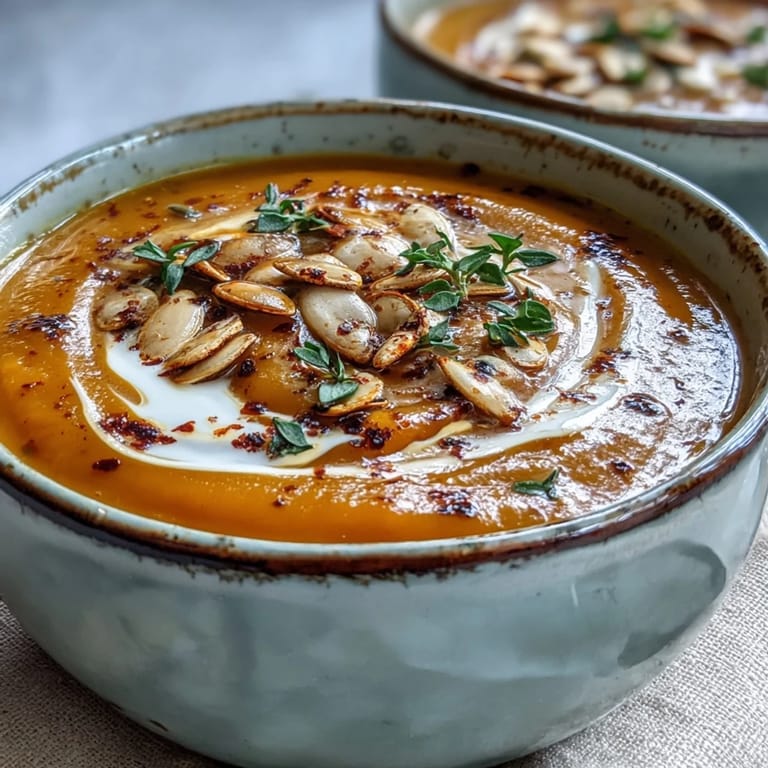
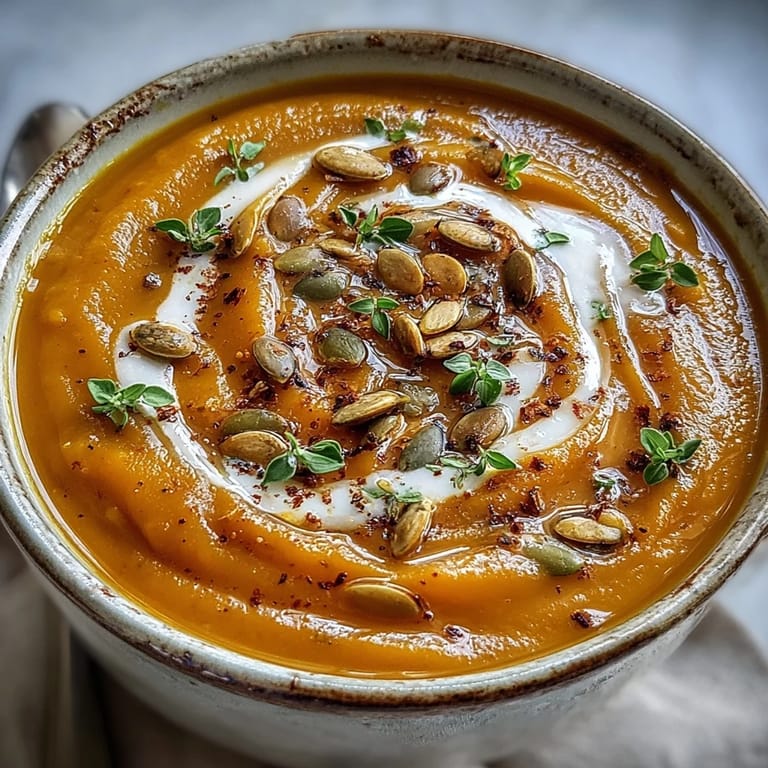
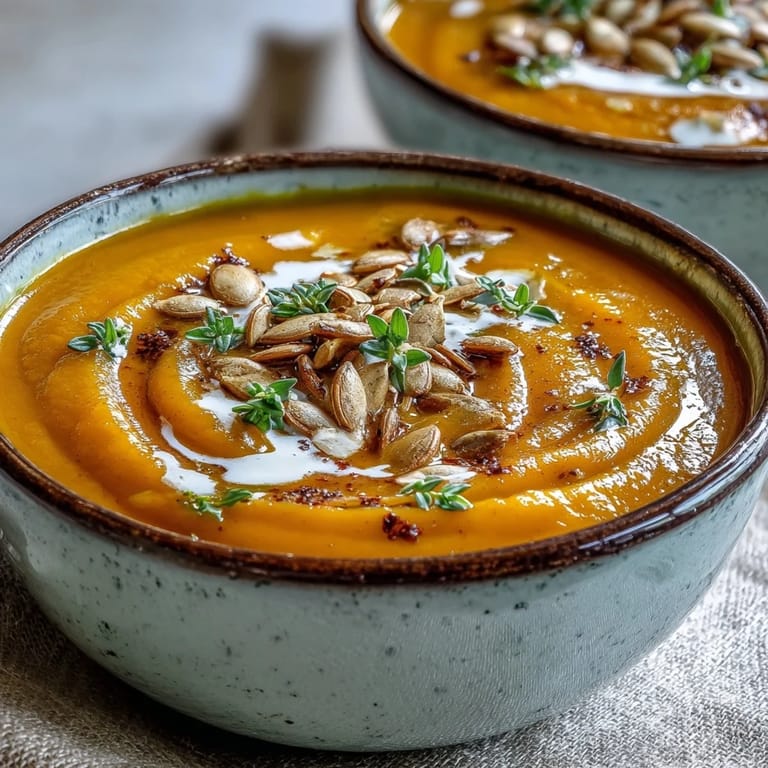
- Reheat gently if needed, then ladle into bowls and top with toasted pumpkin seeds, a drizzle of maple syrup, and fresh thyme if you have it.
 Pin It
 There's a moment when you blend everything together and the soup transforms from separate ingredients into something unified and velvety—that's when you know it's going to be good. My grandmother called it the point where a dish becomes itself, and I think about that every time I make this.
The Roasting Secret
Roasting the butternut squash before blending changes everything about the final soup. When you roast, the natural sugars caramelize slightly, creating depth and complexity that boiling never achieves. The edges get a little crispy and golden, which adds texture memory even after blending. This step takes time but it's truly passive—you're just letting the oven do the work while you handle the onions and garlic.
Choosing Your Finish
The cream or coconut milk decision changes the personality of this soup completely, and both versions are worth making. Coconut milk brings a subtle sweetness and keeps everything plant-based, perfect if you're cooking for mixed diets or just want something lighter. Heavy cream makes it feel richer and more indulgent, the kind of soup that makes you feel taken care of. I often pick based on my mood more than anything else, and honestly, you can't go wrong either way.
Variations and Add-Ins
Once you nail the basic recipe, this soup becomes your blank canvas for experimentation. A pinch of cayenne pepper adds subtle heat that makes people pause and ask what makes it taste so interesting. Sage could replace thyme if that's what you have on hand, and a tiny splash of apple cider vinegar at the very end adds brightness without making it taste sour. Some cooks swear by a touch of ginger, others love a sprinkle of crispy sage, and honestly, that's the fun part about having a solid foundation.
- Add a pinch of cayenne if you want a whisper of heat without making it spicy.
- Try fresh sage as a garnish instead of thyme for an earthier flavor profile.
- A splash of apple cider vinegar stirred in at the end brightens everything without being obvious about it.
 Pin It
 This soup has a way of becoming a seasonal staple once you make it the first time. Serve it with crusty bread, a simple salad, or just as is on an evening when you want something warm that tastes like it matters.
Recipe FAQs
- → Can I make this soup ahead of time?
Yes, this soup stores beautifully in the refrigerator for up to 4 days. Reheat gently on the stovetop, adding a splash of broth if it thickens too much. You can also freeze it for up to 3 months in an airtight container.
- → What can I substitute for butternut squash?
You can use other winter squashes like acorn squash, kabocha, or even sweet potatoes. The cooking time may vary slightly depending on the vegetable's density, but the method remains the same.
- → How do I make this soup vegan?
Simply use coconut milk instead of heavy cream, and ensure your vegetable broth is certified vegan. The maple syrup and all other ingredients are naturally plant-based, making this an easy vegan adaptation.
- → Why roast the squash instead of boiling it?
Roasting caramelizes the natural sugars in the squash, creating deeper, more complex flavors with subtle sweetness. Boiling can make the squash watery and dilute its taste, while roasting concentrates the flavors beautifully.
- → Can I adjust the sweetness level?
Absolutely. Start with 1 tablespoon of maple syrup and taste before adding more. The natural sweetness of roasted squash varies, so adjust according to your preference. You can also balance sweetness with a squeeze of fresh lemon juice.
- → What texture should I aim for when blending?
Blend until completely smooth and creamy with no visible chunks. If using a countertop blender, work in batches and fill only halfway to avoid hot liquid overflow. An immersion blender works directly in the pot for easier cleanup.